
Autumn and winter training at Stave Hill
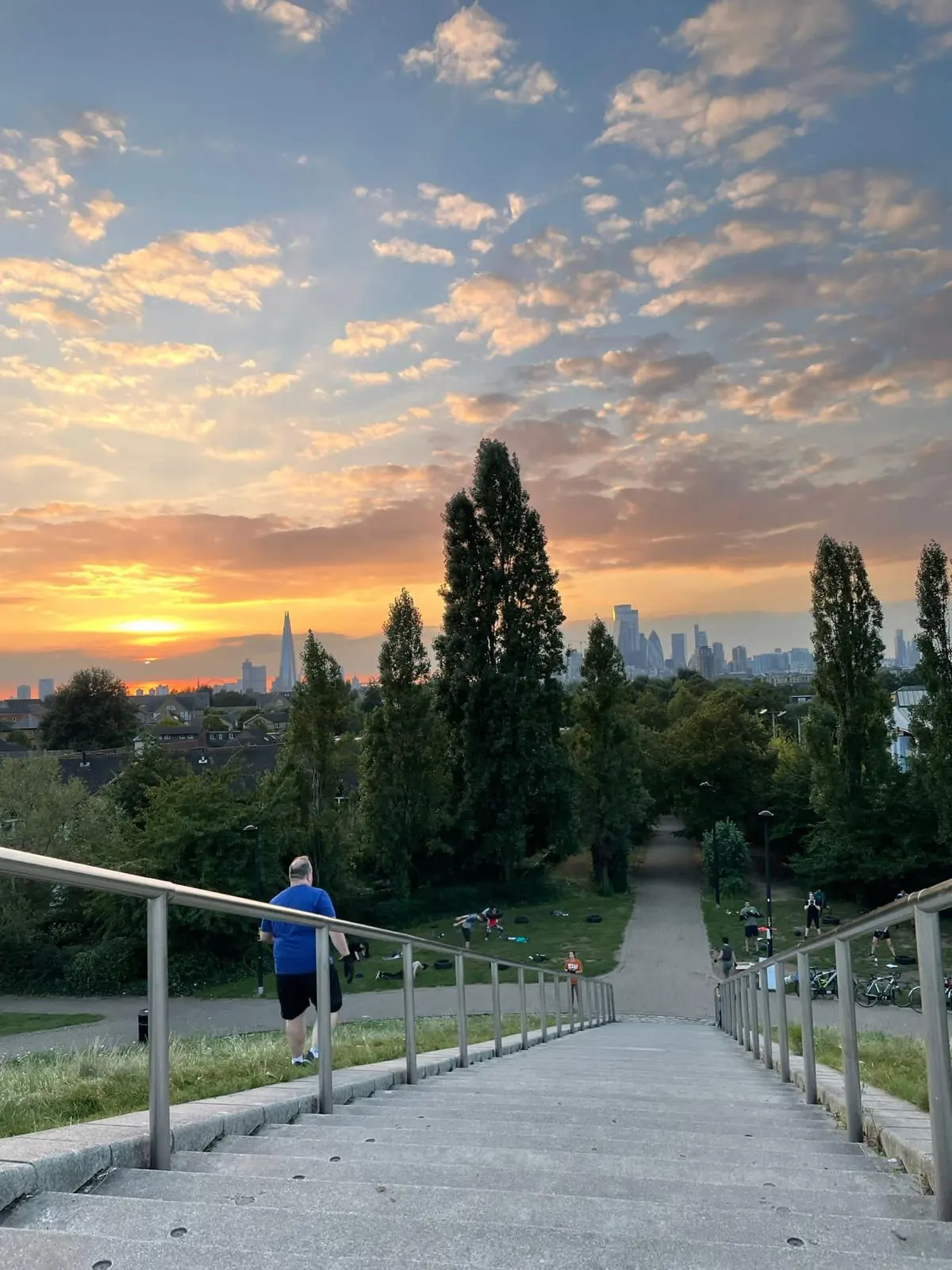
Autumn and winter are the seasons that make outdoor training worth having, not the seasons to hide from. The leaves around the training area at Stave Hill turn, the air sharpens, and the park becomes a better place to work than any room with a ceiling in it.
This is also the point in the year when a lot of people quietly stop. The clocks go back, the evenings close in, and a routine that held all summer starts to slip. So here is what actually changes at Bootcamp SE16 when the seasons turn, and what keeps people going through it.
What changes at Stave Hill
Less than you would think. Sessions run mornings, evenings and weekends all year round. The warm-up gets a little longer, because bodies take longer to loosen in the cold. The ground gets softer, which is kinder on your joints and harder on your trainers. We use the steps and the hill more, and the wet grass less. The meeting point is chosen so the dark evenings are not an issue, and there is always someone walking back towards Canada Water and Surrey Quays afterwards.
Why the cold months suit outdoor training
- You overheat far less, so hard work feels more sustainable than it does in July.
- Daylight is scarce, which makes a morning session outdoors worth more to you now than at any other time of year.
- The park is quiet. In autumn, Stave Hill is one of the nicer places to be in south London.
- Finishing a session in bracing conditions does something for your head that a warm gym does not.
Members often describe winter training as the thing that makes the rest of the year feel manageable. There is no great mystery to it. You did something difficult before your working day started, and the day starts from there.
Kit that makes the difference
- Layer properly. A base layer, a mid layer and a light waterproof beats one thick coat, because you will want to shed something ten minutes in.
- Cover the extremities. Gloves and a hat make more difference to how cold you feel than anything else you own.
- Trainers with grip. Old ones. The mud is part of the deal from October onwards.
- Dry clothes for afterwards. Socks especially. Getting cold after the session is what people remember, not the session itself.
Habits that hold through winter
Consistency matters more than intensity between now and March. Two sessions a week that you actually attend will do more for you than four you plan and skip.
Eat with the season, which is no hardship: soups, stews, root vegetables and something warm after an evening session. Sleep is quietly doing more work than any supplement, and a rested body copes better with cold, dark mornings and with the coughs that go round every winter. Vary what you do as well. A weekend walk, a run around the docks, or the Stave Hill steps on your own all count.
Arriving at spring ahead
The real argument for autumn and winter training is what happens in March. Train through, and you meet spring with your strength and fitness intact, ready for something new. Stop, and you spend the first six weeks of good weather recovering ground you already had.
Bootcamp SE16 has trained at Stave Hill Ecological Park since 2013, through every autumn and every winter since. Sessions are coached, mixed ability and open to complete beginners, from £9 a session, about ten minutes on foot from Canada Water station or Surrey Quays. Give us a call, then wrap up.