
How to make friends in London in your 30s and 40s
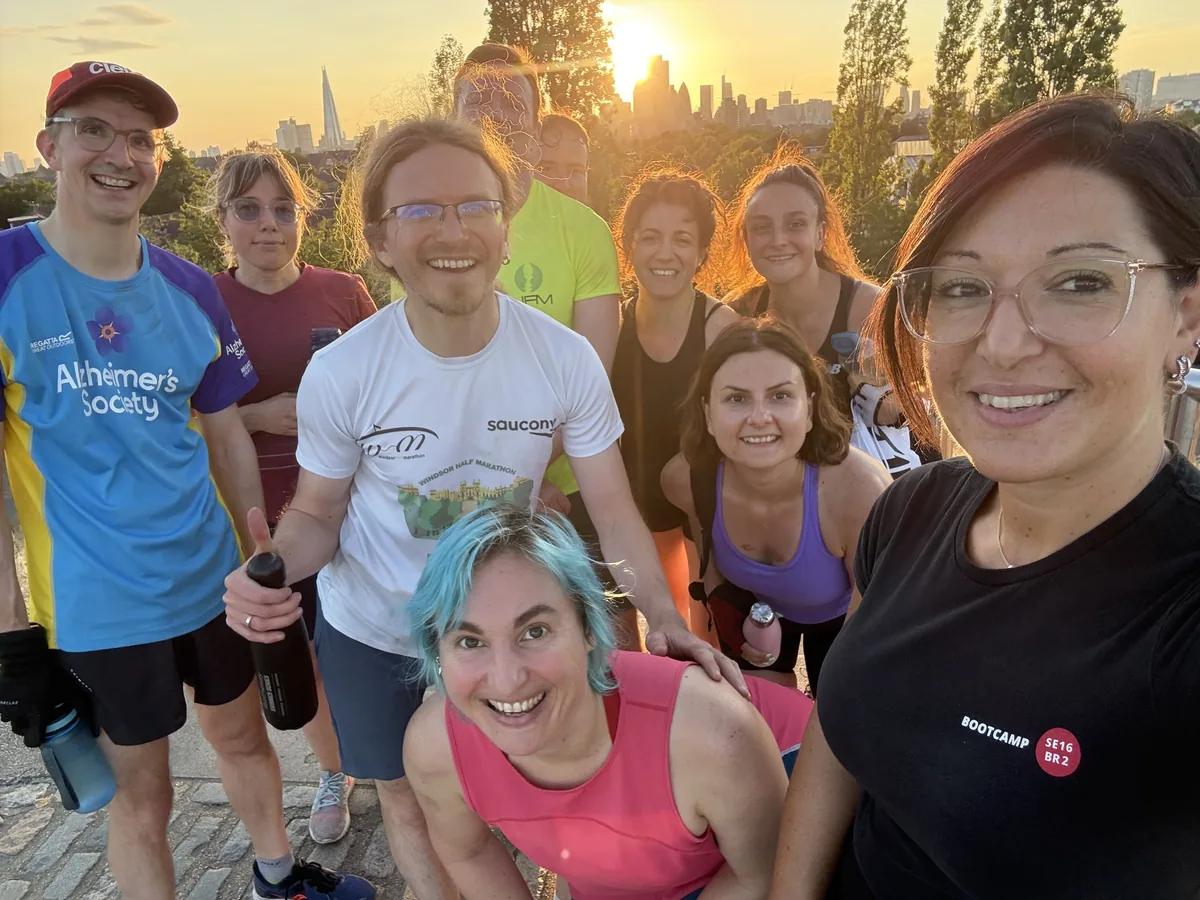
The most reliable way to make friends in London after thirty is to see the same people at the same time every week, doing something side by side. One-off events are fine for meeting people. Friendships come from repetition, and most adult lives have very little of it built in.
Why it gets harder
At school and university, friendship took care of itself. You were in the same place as the same people for years. After that the structure disappears. Friends move out of London or across it, partners and children take the evenings, and working from home removes the one place many people still saw others every day.
London makes it more pronounced. You can live in a building with a hundred other people and know none of them. One of our members put it better than we can in her Google review:
It is weirdly hard to meet your neighbours in London even when you are literally surrounded by them. Bootcamp somehow solves this.
Canada Water is filling up with new neighbours
Around Canada Water the question is only getting bigger. The revised plan for the area, approved in March 2026, allows for up to 4,184 new homes (British Land). That means thousands of people arriving in SE16 over the coming years, and plenty of them will not know a soul on the peninsula.
What actually works
Look for something with a fixed time and the same faces each week, where you have something to do together so the conversation can look after itself. By that measure a few options stand out.
- Run clubs. They have become one of London's favourite ways to meet people, and most are free. They suit you best if you already run.
- Volunteering. Regular shifts with the same team, and a reason to be there beyond yourself.
- Team sports and choirs. Brilliant if you already have the skill, harder to walk into from scratch.
- A coached group session. Open to any fitness level, and built around working with other people.
We are obviously biased about the last one, so here is how it works in practice.
Why a bootcamp is good at this
A lot of our strength work is done in pairs and small groups. You rest while your partner works, then you swap. By the end of a session you have spent an hour next to someone, and the conversation happens without anyone having to start it.
Because the same sessions run at the same times every week, you see the same faces. A coach learns your name early on, and so do the people next to you. Outside the sessions there are socials, an annual birthday sports day, volunteering days looking after Stave Hill, and teams heading off to events like Tough Mudder together.
Nobody makes you introduce yourself on day one. It is fine to come, train and leave. Most people find that after a few weeks they stop leaving straight away.
If you are going to try it
- Pick one time and keep it. The same Tuesday evening for six weeks will do more than six different sessions.
- Go more than once before you judge it. The first session is the only one where you know nobody.
- Say yes to whatever happens afterwards. The walk back to the station counts.
Sessions run seven days a week at Stave Hill in Canada Water and in Bromley. The Trial Experience is £39 for four sessions within two weeks, starts with a short call so we know what you are looking for, and has to be booked in advance. You can start on your own. Almost everybody does.