
How outdoor training changes body and mind
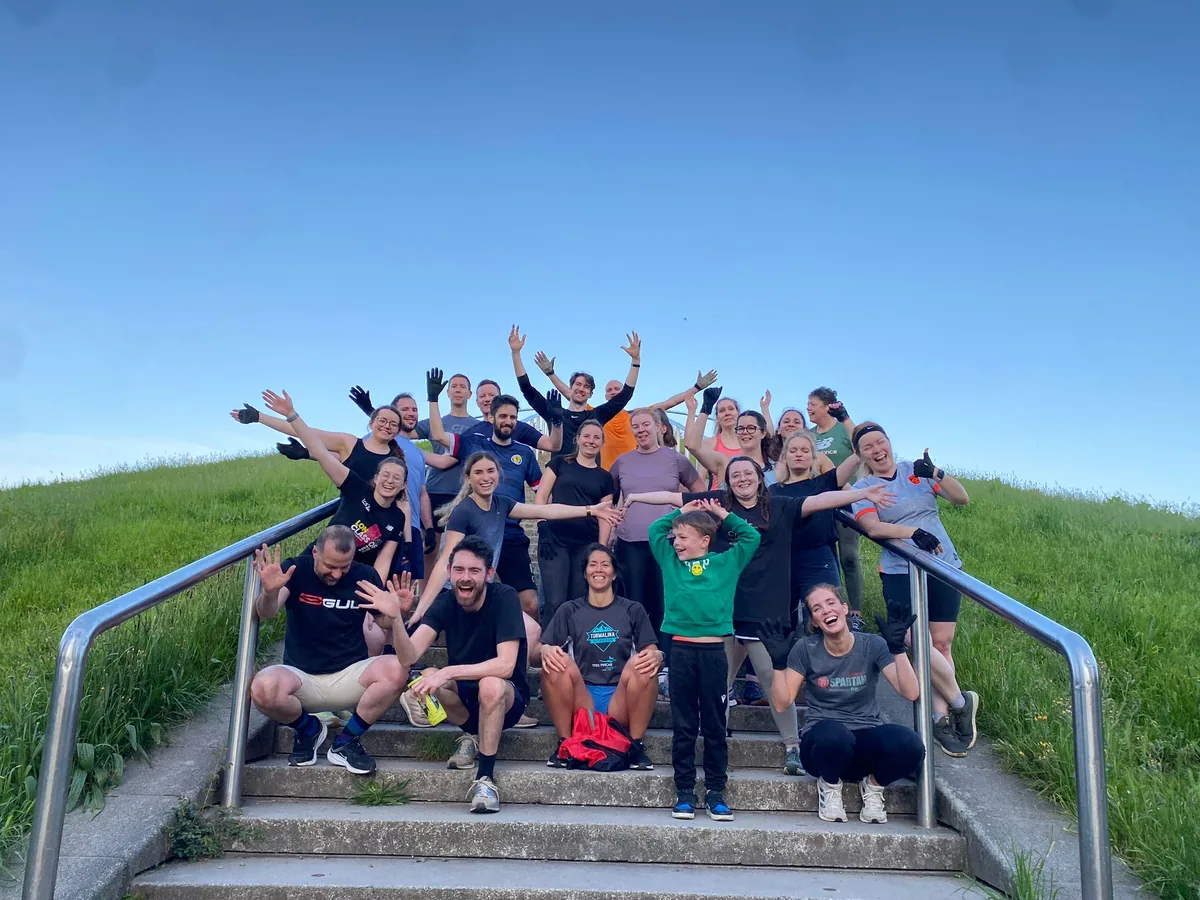
Outdoor training changes two things at once: what your body can do, and how you feel about doing it. At Bootcamp SE16 that happens in a park in Canada Water rather than a gym, and the setting turns out to matter more than most people expect.
If you are bored of a treadmill facing a wall, the fix is often a better environment rather than a better programme. Stave Hill Ecological Park gives you woodland paths, a meadow, a steep set of steps and a view across to Canary Wharf, all a short walk from Canada Water, Surrey Quays and Rotherhithe stations.
What changes in your body
Training on real ground is simply a harder job than training on a flat floor. Grass, slopes, mud and uneven turf ask your feet, ankles, knees and trunk to make constant small corrections. Over months that tends to build the kind of steadiness you notice away from training, on stairs, on wet pavements, and when you are carrying something awkward.
The sessions themselves mix strength and conditioning rather than choosing one. A typical week might include:
- Compound strength work with kettlebells and dumbbells, which loads the whole body rather than one isolated muscle.
- Intervals on the hill and the steps, which push your heart and lungs without an hour of steady jogging.
- Carries, drags and tyre work, which are about as close to real life as training gets.
- Mobility and core work, usually at the end, when everyone is glad to be lying down.
Because the group is mixed, every one of those is scaled. The same session works for someone in their first week and someone in their fifth year.
What changes in your head
This is the part people underestimate before they start and talk about most once they have. An hour outdoors, in daylight, moving with other people, does something for mood that an hour indoors on your own does not. Time spent in green space is widely associated with feeling calmer and less wound up, and a park in SE16 is an easy way to get some.
There is a second effect that has nothing to do with nature. It is the quiet confidence that comes from doing hard things repeatedly. You train on a cold January evening when you did not want to. You lift something you would not have attempted in month one. Those experiences accumulate into a different sense of what you are capable of, and it does not stay inside the session.
Almost nobody joins for the friendships. A surprising number stay for them.
The bit that keeps people coming back
London is a strange place to make friends. You can live in a block in Canada Water for five years and know nobody in it. Training with the same group twice a week, outdoors, where everyone is slightly out of breath and nobody is performing, breaks that down quickly.
The practical value of that is consistency. When people expect you, you go. When you have arranged to meet someone at the park gate, the excuse you were building on the walk home dissolves. For most members the group is what makes the training happen at all.
Starting
You do not need a base level of fitness, any particular kit, or a plan. Trainers, water and clothes you do not mind getting muddy will do. Sessions run mornings, evenings and weekends at Stave Hill and are from £9 once you join, and most people begin with the Trial Experience so they can see the group and the coaching for themselves.
Train once in decent weather and you will enjoy it. Train once in the rain and you will understand why people have been doing this here since 2013.